Coaches Toolbox

  • Home
  • Mental Toughness
  • Leadership
  • Motivation
  • Staff Development
  • Program Building
  • Archives
  • Sport Specific Sites
    • Athletic Performance Coaching
    • Basketball Coaching
    • Football Coaching
    • Soccer Coaching
    • Track and Field Coaching
    • Volleyball Coaching

Can Advice from Your Athletes Help Your Team?

April 1, 2018 by

How can coaches best draw out and utilize the knowledge and insights of their athletes?

This article was provided by Coaches Network

It’s no secret that many coaches seek advice and input from others, whether it be assistants, coaches that they had in the past, or even coaches of other teams. What they might not realize is that the people they should draw most input from on a daily basis are right under their noses—their players. But how can coaches best draw out and utilize the knowledge and insights of their athletes?

In a blog for Hudl, Dan Hoppen explains that athletes have a different viewpoint of the game than coaches, since they are the ones who are engaging in the action on the field of play. This can provide valuable information and ideas that a coach probably wouldn’t be able to come up with. However, Hoppen does stress that coaches shouldn’t take every bit of input from each and every player and apply it to the game directly. For many athletes, it might be hard for them to separate themselves from their own desires or their own viewpoints about what is happening on the field. Instead, Hoppen suggests starting with upperclassmen as many of them can more easily think back on and assess the actions of the team as a whole.

“These players can offer valuable insight on not only their individual matchup, but the tempo of the game, why a play did or didn’t work, and notes on the opponent,” writes Hoppen. “Identify a few older players, preferably captains, and ask for their input. These interactions will offer a different perspective on the game, give the athlete confidence and improve your relationship.”

Another method for gaining athlete feedback is to use video. Hoppen explains that doing this can sometimes make it easier for athletes to distance themselves from the emotions of the competition and see each action more objectively. Another benefit of going back and watching each play on screen, according to Hoppen, is that it can help athletes feel more comfortable coming to you with their insights.

And while many coaches might feel like they don’t have enough time for this in their already hectic schedules, Hoppen says that even taking 15-minutes for a video session can make a difference in creating relationships and trust, as well as help you learn some tips that could help your team excel. No matter how much time you decide to set aside for these meetings, Hoppen suggests asking some specific questions to make the most of your time with athletes.

“Identify certain plays and ask the athlete why they did or didn’t work,” he writes. “What did he or she see that caused a certain set to fail? Did the opponent adjust after seeing the same play a few times? If so, how could the play be tweaked to keep them guessing?”

Last, Hoppen admits that coaches can sometimes become stuck in their ways. This isn’t necessarily a bad thing, as the style that you utilize on a daily basis is probably one that you have become comfortable with and that you trust to lead the team to success. However, Hoppen also explains that every year your team changes, and with this change comes new attitudes, opinions, and abilities. Sticking to one style of play could hurt the team rather than help it. To stop this from happening, Hoppen suggests using the input of athletes to switch up game play based on the current team.

“Ask your most trusted players what they think might work or if there’s something the team can do better,” writes Hoppen. “You don’t have to make sweeping changes based off these suggestions, but sourcing more information gives you a behind-the-scenes look at what the locker room thinks when you’re not around.”

Click here to read the full article.

Filed Under: Professional Development

Get Better at Following Through

March 28, 2018 by

This post provided by Busy.Coach

Coaches often have a handful of great ideas about how to improve their program. For many coaches it is difficult to put those ideas into action. Here are some thoughts getting better at following through.

By Mandy Green

I just finished up speaking at the United Soccer Coaches Association National Soccer Convention.

A big thing that coaches were talking to me about this weekend is that they always have a lot of new ideas for how they can work better, but after the initial excitement wears off, they struggle to follow through and take action.

Although you start the day with the best of intentions, of course, you know what happens right? Life throws you a curveball. Maybe an administrator, another coach or somebody on your team stops by for an unexpected conversation.

Or maybe even for you, an addiction to distraction kicks in. Sorry if this sounds a little harsh, but coach, when you allow yourself to get distracted for long enough, you’ve essentially trained your brain to underperform. As a result, you likely struggle from a lack of focus, perhaps an inability to concentrate for long periods of time, and this near constant feeling of being totally overworked and overstretched and overcommitted.

But here’s the deal: if you want to create and contribute and experience extraordinary things in this life — and I believe you do because you are reading this newsletter — then you have to buck the status quo. You have to break cycle of these addictions and really push back against all these other distractions. You need to develop an unshakable ability to follow through on what is most important to YOU.

I mean, just think about it. When was the last time that you really completed a goal that truly mattered to you? When was the last time you set an important goal and you made it happen? I mean, doesn’t it just feel GREAT to check something off your list or complete an important project or say that something is finally DONE?

You see … no matter how enthusiastic we are at the beginning of any new day or with each new project, there’s one crucial habit that makes all the difference in the world: follow-through. And the ability to finish what we start.

As I continue to try to help you decide what’s most important, then to eliminate what’s not important, and to make doing the work that you need to do as effortless as possible, I can tell you without hesitation that THIS ability — the ability to focus on what matters, to finish what you start — has been invaluable to me as a coach, as a business owner … and quite frankly, as a human.

From my own experience, I have found that there are two big problems that get in our way of following through:

First, most of us are working on way too many things at once. We allow ourselves to be pulled in too many directions. Instead of making meaningful progress on a single project that really, really matters, we wind up feeling constantly overloaded and overstretched and get stuck doing maintenance tasks all day.

Now the second problem? Oftentimes we are fuzzy about our outcome. Meaning, most of the time, we’re just working hard and trying to keep our heads above water without a clearly defined, achievable result that we’re working towards.

The good news here is we have the power to fix both of these problems. And when we do, we gain some serious momentum and we train ourselves to become masters of follow-through.

So the very first step is this: we must decide.

Meaning, DECIDE what’s truly most important. And, to be clear — I’m not talking about several things here, I’m talking about choosing just ONE thing. One TOP priority. One single goal.

For you to develop the habit of finishing what you start – you’ve got to be willing to choose ONE important goal or ONE project that you want to get done.

Did you know that the word “decide” comes from the Latin word, “decidere,” which means “to cut off”? So when you decide on one thing, you cut yourself off from everything else except from that which you’ve said is most important.

As it is Sunday and you are hopefully preparing for kicking ass in the office this week, I want you to think about this question: What’s one thing you could focus on (a single project or goal) that, if you finished it, would make a tremendous positive impact on your program and life?

If you’re having trouble committing to JUST one thing, if you’re unwilling to commit to one thing, I want you to remember this: you’re most likely going to be distracted by EVERYTHING.

Shut off your phone, close email and eliminate all distractions. Have a great week!

If you want to challenge yourself to a Busy Coach 30 Day Productivity Challenge this month, go here to get the details.

Email me at [email protected] to let me know how it goes for you. I love hearing all of your success stories of how this is working for you!!!!!

If you are interested in having me help you get your program and staff organized and firing on all cylinders this year, email me at [email protected].

Win the day!


Filed Under: Professional Development

Rules vs. Standards

March 20, 2018 by

Editor’s Note from Brian: This article was written by a basketball coach, but I feel that the principles are applicable to coaching any sport.

This article was contributed by:

Justin Matthew Brandt
[email protected]
CoachJB.weebly.com
Here is a link to his YouTube channel

I have been asked on multiple occasions on what my rules for my classroom or team are. My response is always the same, we do not have rules, we have standards. From reasoning to prescription practices, you will be able to decide for yourself which one is actually more beneficial after digesting the information provided below.

There are major differences between the two terms, even in their simplest of forms, the definitions. Provided below are the results for the two words if you were to search for them on Google.

Rule – one of a set of explicit or understood regulations or principles governing conduct within a particular activity or sphere.

Standard – a level of quality or attainment. An idea or thing used as a measure, norm or model in comparative evaluations.

By definition alone you can see that rules are very forceful and demeaning. In fact, if you were to reference a thesaurus for synonyms for words used in the definition, you would also find words such as “command”, “controlling” and “dominant”. Individuals are forced to bow DOWN and abide by a set of rules they may not even agree with. On the contrary, if you did a similar search for standards you would find words such as “character”, “individuality”, “genius”, and “virtue”. In this case, individuals rise UP in the situation to increase their likelihood of success. Thus, by definition alone, rules are negative, while standards are positive.

During an interview, Coach Mike Krzyzewski once described his reasoning for use of standards instead of rules by stating…

“When I was at West Point, we had a bunch of rules, all of which I didn’t agree with. Usually when you’re ruled, you never agree with all the rules, you just abide by them. But if you have standards and if everyone contributes to the way you’re going to do things, you end up owning how you do things.”

Take a moment to reflect upon this statement with the provided example. You are abiding by the rules just because it’s what you are supposed to do. So instead of running the floor with reasoning, maybe because the team you are playing against enjoys slowing the pace, you jog because it’s January and you are tired of running due to the rule. Or, my favorite, for the purpose of “because I said so”. Sound familiar?
Unfortunately, the reasoning provided above is far from being bizarre or a foreign concept. Knowing the why is the first step to buying into anything! You rarely spend your money on products without any reasoning behind it, why would you spend your time, something that has no return policy, on buying into a rule that makes no sense to you?

I’ll answer this one for you…you wouldn’t! What makes you think that your athletes will? Here are the positives and the negatives of changing this ONE statement. Negatives, you are no longer able to be lazy and some of your views that you thought were good, may actually reveal themselves to be bad. Positives, you and everyone else involved will gain perspective and reasoning, you will work harder, you will increase your program’s comprehension and you will eliminate bad habits/mentalities that were potentially holding you back. All by simply providing reasoning and answering the why.

While knowing the why is the first step when it comes to buying into anything, that does not mean it stops after day one. You will have to continue to reinforce the why on a regular basis. Your standards should also be relevant, realistic, have background data to support them, be developing and have consequences.

Relevant. The easiest way to make standards relevant is to gain input from your athletes. It is very easy to look up standards from other great teams and attempt to implement them. However, as Coach K said before in his interview, “if everyone contributes to the way you’re going to do things, you end up owning how you do things.” Ownership cannot be understated. When people don’t live up to the standards that they put into place, you can hold them accountable for both the decision they made to set the standard and the decision they made to not live up to it. Coaches, support staff and athletes alike.

Realistic and Background Data. I put these two in the same section because they work harmoniously. Your standards must be realistic for your players to live up to. If your team is young and struggling with turnovers, don’t set your standard to zero turnovers. It’s unrealistic to expect someone to go from 10 turnovers in a game to none. You wouldn’t expect a beginner weightlifter to squat two and half times their body weight, so why should your basketball player be any different? With that, you must provide some background data not only to hold them accountable, but to provide them with a standard to live up to.

The best example I can provide is drill work. One drill we do consists of athletes getting two jump shots and a lay-up in during one trip down the floor. It is a continuous transition drill that lasts three minutes long. Each year our standard is set by the numbers they achieve while running through the drill. If they don’t live up to the standards there is a consequence. The JV players and Varsity players have different standards. However, they are given the standards that are used for local collegiate programs as well. This leads into developing.

Developing. Once your players reach the standard consistently, it is time to raise the bar. In doing so, you promote a growth environment as opposed to a simple living at status quo. But remember to keep it realistic. What does that look like? If your team’s standard for “shooting drill A” is 13 and they reach 15, then the new standard is 15. If your squat workout this week is 3×10 at 200lbs, next week it’s 4×10 at 200lbs or 3×10 at 205lbs.

Consequences. While it is the least favorite portion of most people’s programs, consequences are essential to growth. You can talk goals, rules or standards until you’re blue in the face, but if there’s nothing there to hold you accountable afterwards, the majority of the population will continue to come up short. However, like your standards, make sure that your consequences are realistic and appropriate. The days where coaches make their student athletes run 30 suicides because they missed one free throw should be long gone. ESPECIALLY, if you have a coaching philosophy of running and scoring in transition. By punishing athletes with running, they associate running with a negative consequence. Do not make punishments as you go, have them predetermined, this way your emotions from the situation don’t dictate what happens in the moment.

The quick summary… Standards are instinctively more positive than rules. Rules encompass negative connotations and empower the coach/supervisor while standards inspire everyone in the program to contribute/grow their level of excellency. In order to set standards, you should be able to answer the why, make them relevant, realistic, have background data to support your standards, make sure they are always developing and growing and you MUST inforce consequences. The question you have to ask of yourself, staff and athletes now is, what standards do you want to set in order to raise your level of excellency?


Filed Under: Program Building

What Can I Give? The Question Every Athlete Should Ask

March 12, 2018 by

If you want your athletes to perform at their very best, whether you are a parent or coach, then you must get them the right question. What can I give?

By John O’Sullivan, Founder of Change the Game Project

“Coach, can I talk to you?”

“Sure,” I said. “What’s on your mind today Michael?”

“Well, I just want to know what I can do so I get to start more games and get more playing time as a center midfielder. I don’t think I am showing my best as a winger, and my parents tell me I am not going to get noticed by the college scouts unless something changes.”

Well Michael,” I said, “there is something that all coaches are looking for from the players they recruit. In fact, it is exactly what I am looking for from you as well. If you approach every practice, every fitness session, and every match with this one thing, I think you will see a huge improvement in your play, regardless of where you play. Interested?”

“Of course, coach. What is it?”

I waited a moment before I answered to make sure he was listening.

“You have to stop asking what you can get, and start asking what you can give. You must serve.”

Michael furrowed his brow as he tried to process what I told him.

“You want me to serve the team, like with food?”

I smiled, “No Michael, serving others is the one thing that unites successful people, from friends to employees to athletes to business owners. The great ones know that to be more they must become more, and to become more they must serve others.”

“So, you are saying that instead of asking what I can get from the team, I should be asking what I can give to the team?”

I wanted to leap out of my chair and hug him.

Michael got it. It’s not about him. It’s not about me. It’s about service. The tool that would eventually earn him more playing time and increase his chances of playing in college serving others by focusing upon what he could give, instead of what he could get.

My great friend and coaching mentor Dr. Jerry Lynch is the founder of Way of Champions is the winner of 34 NCAA titles and one NBA World Championship as a sport psychologist and consultant. He calls this paradigm-shifting question the most effective question an athlete can ask, and an attitude that every coach must try and instill in his or her team.

We live in a world these days where self-centeredness and a ‘what’s in it for me” attitude of entitlement is far too prevalent. In the age of the selfie, Instagram, Facebook and a million other ways to say “look at me,” the concept of teamwork and the importance of service to others has gotten lost in the shuffle.

This is very sad, because service to others is the exact thing that athletes need to not only become elite performers, but the type of athlete that coaches look for, celebrate, and fight over at the next level. Do you want to stand out from the crowd?

Start by serving everyone in that crowd.

Far too many athletes bring the attitude of “what do I get” to practice and games. They want to know how they can:

Get to start
Get more playing time
Get to play my favorite position
Get to score all the points/goals
Get to work hard when I want to
Get to show up (physically and mentally) when I feel like it
Get to give less than my best because I am an upperclassman
Get attention as the star player
Sadly, this is the path to short-term satisfaction, at the expense of long-term development and high-level performance. This attitude does not promote success; it inhibits growth on and off the field, the court, and the ice.

If you want your athletes to perform at their very best, whether you are a parent or coach, then you must get them the right question.

What can I give?

Athletes who ask themselves what they can give bring “I can give/I can do” attitudes and actions to the table for their teams. The can actually “get” everything they are looking for simply by starting with the following service oriented ideas:

I can give my best effort in practice and games
I can give my team a positive attitude no matter what the circumstances
I can give my team a boost no matter how many minutes I play
I can give my team a better chance to win no matter what position I play
I can do the dirty work so my teammate can score the goal and get the glory
I can sacrifice my personal ambitions for the better of the group
I can lead by example
I can be an example of our core values in action
As a coach, I used to think that the most important thing was to have my best players be my hardest workers. But now I realize that isn’t enough. Being a hard worker can still be a selfish pursuit.

No, the most important thing as a coach is to have a team that all ask “what can I give,” especially when it come to your captains, your upperclassmen, and your most talented athletes. You must teach them that the selfish attitude may once in a while lead to success, but the selfless attitude leads to excellence, celebrates the success of others, and makes you the type of athlete that EVERY COACH wants on his or her team.

The most successful sports team in the professional era is not the NY Yankees, or the Boston Celtics, or Real Madrid, but a team from a far less known sport. It is the New Zealand All Blacks in rugby, who have an astonishing 86% winning percentage and numerous championships to their name. In the outstanding book about the All Blacks called Legacy, author James Kerr discusses one of their core values that epitomizes the selfless attitude.

It’s called “Sweep the Shed.”

You see the goal of every All Blacks player is to leave the national team shirt in a better place than when he got it. His goal is to contribute to the legacy by doing his part to grow the game and keep the team progressing every single day.

In order to do so, the players realize that you must remain humble, and that no one is too big or too famous to do the little things required each and every day to get better. You must eat right. You must sleep well. You must take care of yourself on and off the field. You must train hard. You must sacrifice your own goals for the greater good and a higher purpose.

You must sweep the shed.

After each match, played in front of 60,000 plus fans, in front of millions on TV, after the camera crews have left, and the coaches are done speaking, when the eyes of the world have turned elsewhere, there is still a locker room to be cleaned.

By the players!

That’s right, after each and every game the All Blacks leading players take turns sweeping the locker room of every last piece of grass, tape, and mud. In the words of Kerr: “Sweeping the sheds. Doing it properly. So no one else has to. Because no one looks after the All Blacks. The All Blacks look after themselves.”

They leave the locker room in a better place than they got it. They leave the shirt in a better place than they got it. They are not there to get. They are there to give.

If you are a coach, recognize that by intentionally creating a culture where players seek to give instead if get, you will have a team that not only develops excellence on and off the field but is a team that is much more enjoyable to coach. Create a culture that rewards the 95% who are willing to give, and weeds out the 5% who are trying to get. When you do, the “getters” will stick out like a player who is vomiting: he feels better and everyone else feels sick. Eventually, he will get on board, or be thrown off the ship.

Parents, teach your children to be teammates who give. It will not only serve them well in athletics; it will serve them well in life.

For as former NY Yankee great Don Mattingly so eloquently stated:

“Then at one point in my career, something wonderful happened. I don’t know why or how . . . but I came to understand what “team” meant. It meant that although I didn’t get a hit or make a great defensive play, I could impact the team in an incredible and consistent way. I learned I could impact the team in an incredible and consistent way. I learned I could impact my team by caring first and foremost about the team’s success and not my own. I don’t mean by rooting for us like a typical fan. Fans are fickle. I mean CARE, really care about the team . . . about “US.”

Mattingly continued: “I became less selfish, less lazy, less sensitive to negative comments. When I gave up me, I became more. I became a captain, a leader, a better person and I came to understand that life is a team game. And you know what? I’ve found most people aren’t team players. They don’t realize that life is the only game in town. Someone should tell them. It has made all the difference in the world to me.”

Please share this article with an athlete or a team that matters to you. Encourage, no implore them to take Don Mattingly’s advice, to take the All Blacks advice. Come to prepared to compete, and to be a “giver” and not a “getter.”

You will stand out.

You will be a difference maker.

And you will get everything you want by giving full of yourself, and helping everyone else get what they want.

It changes everything.

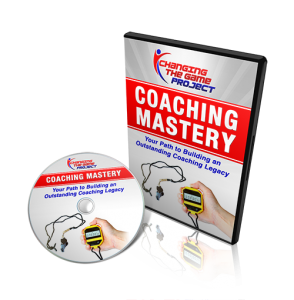
Coach O’Sullivan is a former college and professional player as well as a high school, club team and college coach. He is offering a FREE video series that is part of his Coaching Mastery program. For more information about gaining access to that program click the link above or in the image below. The video series includes a wealth of coaching education including some motivational and team building ideas used by some of the most successful coaches.


Filed Under: Program Building

When (Key) Players Clash: Turning Conflict Into Strength

March 11, 2018 by

by Cory L. Dobbs

John chose Yoko over Paul, George, and Ringo.  Shaq couldn’t stand Kobe.  Steve Jobs was fired by John Scully, his hand-picked CEO.  Socrates rejected Plato’s theory of forms.  Both the West Coast rapper Tupac and the East Coast legend The Notorious B.I.G. were killed as a part of a hip-hop rivalry.  And Carl Jung drifted far from Freud, his close friend and mentor.  Relationships between people of high status often prove challenging.  It not need be this way.

Have you ever been on a team where the players can’t get along?  How about having coached such a team?  Maybe it’s simply a matter of personalities.  Or the circumstances, such as a losing streak, over- power the desire to get along with one another.  Conflicts easily erupt when team relations become dysfunctional.  Yet, many coaches I’ve witnessed seem to think everyone will get along because they are forever preaching teamwork.  This is not so.

The Facts of Life

Your team is only as strong as its weakest relationship.  Yes, I know that’s a strong statement, so let me say it again.  Every team is only as strong as its weakest relationships; and great teams—players and coaches—never assume everyone will get along.  Oh, almost every coach says they spend enough time on relationship building.  Yet when I’ve asked coaches to journal their activities, slowly but surely team building and internal (player) leadership take a back seat to the tasks “necessary” to practice and master the game plan.

Two Sides to Every Story

In an effort to be transparent, let us agree that we like to think of ourselves as being reasonable, mostly right, and when in some level of conflict we often make negative attributions about the other person’s intentions.  Indeed, in the privacy of our own minds, we hold, with white knuckles, our position with a high degree of confidence and certainty.  We must be right, we reason.  The problem is, the other person we are engaged in conflict with is holding tightly to their “reasonableness” too.

Thus a dance of defensive routines emerges.  Each participant—combatant to be sure—thinks that their conclusion is factual, that their view is complete (rather than partial), and the other person is the problem.

The result: conflict.  The condition of the team changes at that moment.  The one-sided nature of each player’s perspective can, and often does, set in motion a roller-coaster of irrationality which invariably will snare more players into its trap.

Nip this in the Bud

You know that to solve a conflict requires slowing things down.  It’s crucial to find out how we got from “there” to “here.”  But the game plan doesn’t allow for this, “We must continue to move forward” you’re likely to think, say—and do.  While you might get back on track, this is why and how things get swept under the carpet.  You know relational issues will catch up with you, but you think if you run fast enough you might out-run the fall-out.  The questionable news is, you just might get away with nipping the problem in the bud.  But it will get you.  It’s just a matter of time.

The Vulnerability of Relational Blindness

Several years ago I worked with a successful high school basketball team.  After a deep run in the playoffs the team wanted to understand how to get over the hurdle and get to the proverbial “next level.”

During a leadership training exercise a senior-to-be, a starter and major contributor, broke down and apologized to his teammates.  He acknowledged the team’s loss should be attributed to him.  As the team’s point guard, with the clock running and down by one point in the state semi-final game, he had the ball in his hand and an opportunity to pass to either of two open teammates.  One teammate was not a scorer (1.5 ppg), while the other was the team’s leading scorer (19.0 ppg) and best shooter.  Down by two, he crosses half court and sees the two teammates open in each corner.  He had a choice.   And he knew the team’s best option.  So do you.  He passed it to the non-scorer, coincidently his best friend, who put up a shot with time expiring.  Air ball.

The caring young man, in his desire to be transparent, admitted that personal bias led to the sub-optimal choice of shooters.  He said it was rooted in a fight he had with the leading scorer around mid-season.   And after the fight was broken up by teammates, he willingly “recruited” the underclass team members to “side” with him.  They did.  And in effect they split the locker room into upperclass vs. underclass; seniors against the juniors.  No coach witnessed the fight, never heard that it happened, and the coaching staff was completely unaware that the locker room split.  The players, in a twisted show of team work, hid the division—the fault line—that ultimately cost the team a shot at the State Championship.

Any time you talk about relationships it’s easy to gloss over the fact that people create and sustain them.  People matter.  Relationships matter.  Student-athletes make a wide range of choices that affect relations, mostly unconscious as in the incident mentioned above.  Importantly, it’s utter folly to think that you, or any coach, will know all that goes on with team member interpersonal interactions.  This, of course, is a reason for team leaders—you need your players to engage in detecting and correcting problems encountered as they build the team.

Over the course of a season incidents like this pile up and drag down practices, film study, and in-game behavior.  Don’t get me wrong, I’m not suggesting coaches are blind to such deviant behavior.  What I do know though is that when the choice for spending time is either better spent on direct team building or the game plan; it is the relationship side of things that usually falls by the way side.  Relationship building is sorely neglected during the course of a season.

Hit the “Pause” Button: Rebuilding Trust

The good news is that when conflicts and dysfunction rear their ugly heads, you can, and should, turn them into team building teachable events.

When two players (or more) clash, you need not throw your hands up and declare the issue unsolvable.  Actually, this is the moment to explore the “honesty” in perspectives.  Most coaches ignore this moment.  It stresses them out.  But if you’re willing to, you can use the “argument” to strengthen the relationship.

In the dictionary, the antonym of honesty is lying.  Thus a participant in any conflict is going to protect himself.  In most cases differences of opinion arise out of one’s desire to feel respected, appreciated, and needed.  And the opposite of arguing is agreement.  The curious thing is that the conflict participants are, for the most part, seeking agreement—however one-sided it is to begin with.

You can capitalize on this moment of truth by harnessing honesty and agreement.

You task, and goal, is turn the adversarial relationship into one in alignment with the team’s mission.  Now is the time to hit the pause button—literally.

Give the participants their own quiet space in which to reflect and respond to the following questions.

  • What is the outcome I want here?
  • Do I want a relationship with this person?
  • What is the outcome our teammates want?
  • What goals do we share?
  • How do I want this to end?

These reflective questions help the student-athlete learn to see themselves as architects of their own experience.  They determine the need and desire to shift to acting on the end they want and the future they’re trying to achieve.

During the course of a season the absence of interpersonal conflict is unlikely.  Conflict is natural.  What you do with conflict will have much to do with the growth, or stunting the growth, of your team building efforts.

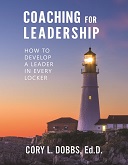
COACHING FOR LEADERSHIP RESOURCE

Coaching for Leadership: How to Develop a Leader in Every Locker. ($24.99)

The Academy for Sport Leadership  

About the Author

Dr. Cory Dobbs is a national expert on sport leadership and team building and is the founder of The Academy for Sport Leadership.  A teacher, speaker, consultant, and writer, Dr. Dobbs has worked with professional, collegiate, and high school athletes and coaches teaching leadership as a part of the sports experience.  He facilitates workshops, seminars, and consults with a wide-range of professional organizations and teams.  Dr. Dobbs previously taught in the graduate colleges of business and education at Northern Arizona University, Sport Management and Leadership at Ohio University, and the Jerry Colangelo College of Sports Business at Grand Canyon University.


Filed Under: Leadership

  • « Previous Page
  • 1
  • …
  • 10
  • 11
  • 12
  • 13
  • 14
  • …
  • 63
  • Next Page »

© Copyright 2026 Athletic Performance Toolbox

Design by BuzzworthyBasketballMarketing.com

Privacy Policy