Coaches Toolbox

  • Home
  • Mental Toughness
  • Leadership
  • Motivation
  • Staff Development
  • Program Building
  • Archives
  • Sport Specific Sites
    • Athletic Performance Coaching
    • Basketball Coaching
    • Football Coaching
    • Soccer Coaching
    • Track and Field Coaching
    • Volleyball Coaching

Developing Inclusive Teams

by

This article was originally published on www.sidelineinteractive.com

This post is a summary of our key takeaways from Volume 2 Episode #97 of The Educational AD Podcast, hosted by retired high school Athletic Director Jake Von Scherrer.  This summary of the podcast episode is posted with permission of Coach Von Scherrer.

You can watch the 27 minute interview on YouTube at this link:  Deepjyot Sidhu Interview

Deepjyot Sidhu is the Director of Equity & Inclusion at the Global Online Academy. She is also a former cross country coach.  The discussion today includes dome practical steps that we can take as coaches to be aware of the differences

Whose voices do you hear in your head when you are working with coaches, teachers, students, athletes, or parents?

Those voices are the sum of what you have heard from your mentors–from both your experience as a student athlete and as an adult educator.   They are the what is still with you from how your parents, teachers, coaches, and other leaders from throughout your life who influenced you.

Regardless of our own personal programming and life experiences, we can decide to do our best to make every encounter a good one.  That doesn’t mean to make everything superficially pleasant.  It does mean that we can make our own choices as to how we act during all interactions both in our personal and professional lives.

Some of the athletes that we work with have far more athletic skill than we had.  Coaching is not only about imparting our knowledge to them, but rather thinking about each athlete individually, what they bring, how they are developing, how they are growing.

Equity and inclusion should be a priority for all coaches and athletic administration.  Making it a priority means developing and designing (or better year redesigning) systems, structures, and practices in the interest of equity and equitable experiences and outcomes for all kids.

Key questions that we all need to ask ourselves as individuals and as staffs collectively.  What does inclusion mean?  How do we design for equity?  In part, it means insuring that we focus on every kid as an individual and their individual athletic experience.  It means disrupting neutrality to bring intention to an environment that fosters a culture of belonging for all kids.

THREE Specific actions that ADs and coaches can take:

1) Start by reflecting on ourselves–who we are and what our experiences, where we grew up forms our perspective.  Starting with self is being aware that your athletes are experiencing things that you aren’t thinking about and are not even aware of. We need to be intentional about expanding our perspective and our lenses.  So that we are not inadvertently leaving anyone out

We have points of focus and points that are in our margins.  We need to be more aware of the margins of the lenses that we see the world through.  It will always be true that you will not have experienced everything that your athletes have experienced.  These experiences that your athletes have had or are having are not always physically apparent.

Here is an example that can be extrapolated to our own specific situation.  A coach or teacher has not had the experience or even taken the time to consider what it is like for one of their student athletes to have a close family member serving in the active military.  Because I have not experienced that, I don’t know what it feels like for one of my athletes who is experiencing that in their lives.

2) Prepare for the ongoing–We all know that team building is not a one-time thing that will last forever.  It requires ongoing attention and intentionality.  That same intentionality is required to be an ongoing equitable practitioner.

Consistently giving some sustained thought to questions such as: Who is new to our team that we haven’t designed structures and systems for to support them?  What can we do to ensure equity for them?

3) Prioritize the Impact You Want to Have–When the goal is to eradicate all inequities, it can be so overwhelming that we might want to give up before we get started.

Always remember that we don’t have to be perfect.   We are doing it for our athletes, so it is important to do as much and whatever we can.

When an athlete shows up to your team for the first practice or call out meeting, they are determining in their own mind if they do or don’t fit in with your group.  That conclusion they are reaching is based on their life experiences to a great extent.  That is why it is important that we consciously and deliberately work to empathize as much as we can.

As coaches and ADs what are we doing to promote belonging?

How do we do a better job of finding the balance of the old school wanting athlete’s to be tough and be aware and sensitive to the challenges that athletes are facing?  It starts by reframing what toughness, mental strength, and courage are.  It takes both of those to face up to and publicly admit what you are going through.

Knowing what the limit is and how to navigate that limit.

Pressures are increasing on young people in athletics and academics and that stress impacts areas of their lives such as sleep and motivation which allow them to be at their best.

We need to be more intentional about the circumstances we create for our athletes.  All while being focused on supporting athletes and less focused on forcing them to comply and to meet unreasonable and often unnecessary standards that don’t help with mental health or performance.

Athletes don’t perform in a vacuum at school or in practices or games–they bring their outside life with them every day.

What advice would Deep have for a new Athletic Director?   Have the agency to make every encounter a good one.  You do that by thinking about EVERY athlete, EVERY team, and EVERY coach.

If you are interested in contacting Deep for further information or discussion on the topic of inclusion, you can reach out to her on Twitter or at the Global Online website:

@deepjyot

www.globalonlineacademy.org

You can watch the entire interview by clicking the play link below


Filed Under: Program Building

A Flawed Reality: When it’s Time to Reflect

by

Two years after landing the head coaching position he so badly desired, Coach Jones (not his real name) was quietly fired. The administrative staff realized they’d made a mistake hiring Jones. They weren’t quite sure why he didn’t work out. They did their homework.

Well, enough to consider him a solution to their coaching needs. However, what they couldn’t see is what did him in. After spending a month analyzing Jones, here are the flaws I uncovered:

  • Is overly demanding
  • Doesn’t listen
  • Is intolerant of dissent
  • Takes the credit for success
  • Blames others for mistakes
  • Is untrustworthy—doesn’t do what he says he’ll do
  • Is aloof—seen as arrogant
  • Has a dictatorial style
  • Is abrasive

It’s fairly obvious, after the fact, that Coach Jones has some serious flaws related to interpersonal interactions (he is comfortable with a transactional style of conversation) and relationship building. Nowhere in his flaws will you find a glitch in his knowledge of the sport. He has a great command of the X’s and O’s. But he has some serious team building flaws.

The two primary blind spots that emerged are: 1) his need to be right in all situations, and 2) avoiding accountability to his players and staff. Coach Jones’ “I know” attitude produced such flaws as taking credit for success and his unwillingness to listen. The desire to avoid accountability (to the stakeholders) produced his blaming of others and his dictatorial leadership style and abrasive attitude toward relationship building created cool relationships between him and his staff and players.

The prognosis for Coach Jones is not good. If he fails to discover his fatal flaws his coaching career will never recover. As a prominent coach told me, “We’re pretty good at directing our players to change, but not so great at changing ourselves.”

CLICK HERE TO DOWNLOAD 10 MORE EXCLUSIVE ARTICLES FROM DR. CORY DOBBS

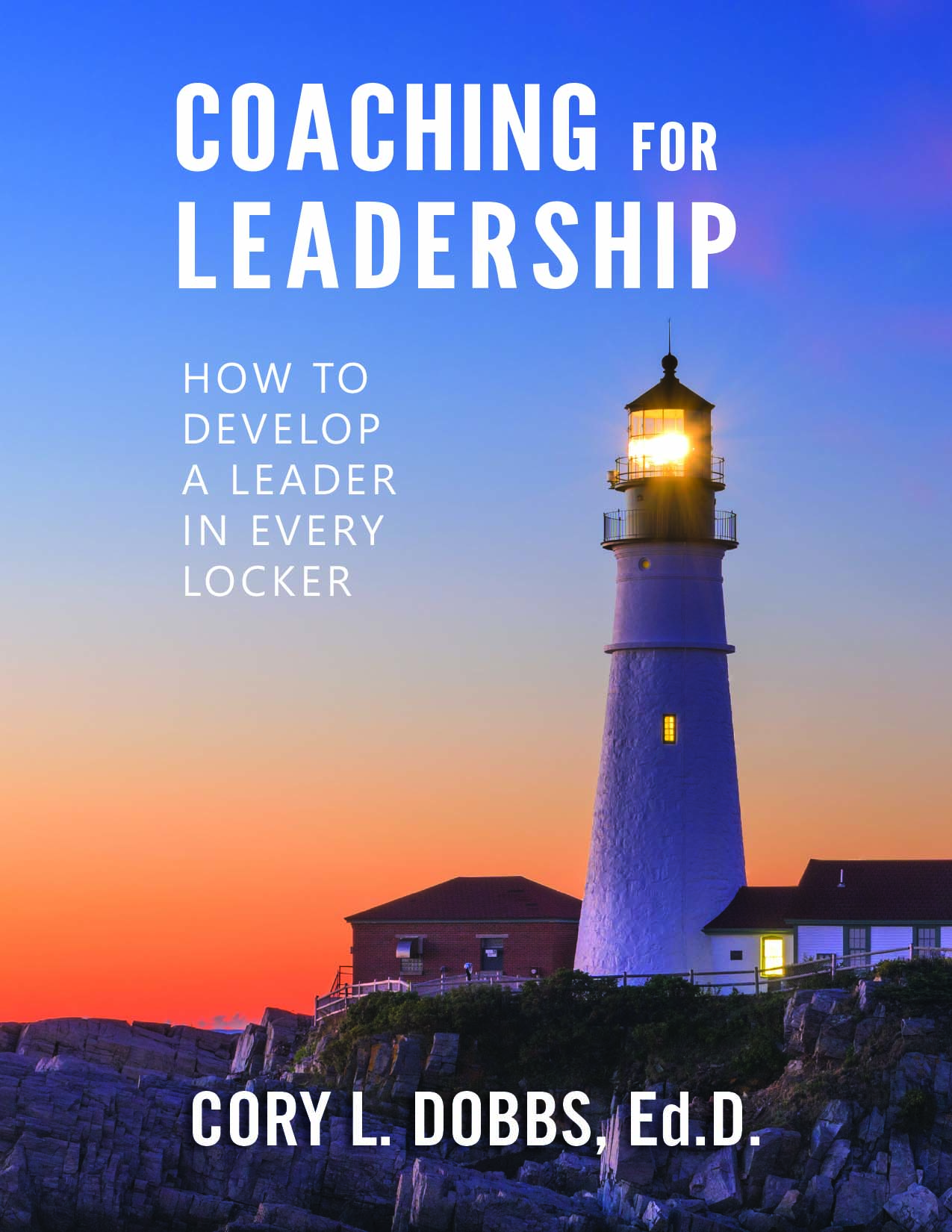
New to the Second Edition of Coaching for Leadership!

We are pleased to announce a new chapter to the second edition of the best-selling Coaching for Leadership. The chapter, The Big Shift: Unlock Your Team’s Potential by Creating Player-Led Teambuilding, connects the previous edition of this book to its origin, as well as to the future of team sports.

The new chapter sets forth a practical and applicable agenda for change and improvement. The reader is introduced to seven vital elements of change; seven shifts of traditional mental models that lead to the new core principles necessary for creating a player-led team culture. Click here for more information about Coaching for Leadership

About Cory Dobbs, Ed.D.

Cory Dobbs is the founder of The Academy for Sport Leadership and a nationally recognized thought leader in the areas of leadership and team building.  Cory is an accomplished researcher of human experience. Cory engages in naturalistic inquiry seeking in-depth understanding of social phenomena within their natural setting.

A college basketball coach, Cory’s coaching background includes experience at the NCAA DII, NJCAA, and high school levels of competition.  After a decade of research and development Cory unleashed the groundbreaking Teamwork Intelligence program for student-athletics. Teamwork Intelligence illuminates the process of designing an elite team by using the 20 principles and concepts along with the 8 roles of a team player he’s uncovered while performing research.

Cory has worked with professional athletes, collegiate athletic programs, and high schools teaching leadership and team building as a part of the sports experience and education process.  As a consultant and trainer Dr. Dobbs has worked with Fortune 500 organizations such as American Express, Honeywell, and Avnet, as well as medium and small businesses. Dr. Dobbs taught leadership and organizational change at Northern Arizona University, Ohio University, and Grand Canyon University.


Filed Under: Program Building

Coaches and athletes working together to eliminate the stigma of mental health afflictions

by

Coaches and athletes working together to eliminate the stigma of mental health afflictions

This post is a summary of our key takeaways from Volume 2 Episode #85 of The Educational AD Podcast, hosted by retired high school Athletic Director Jake Von Scherrer.  This summary of the podcast episode is posted with permission of Coach Von Scherrer.

You can watch the 35 minute interview on YouTube at this link:  Joanne P. McCallie Interview

Joanne P. McCallie is the former Head Women’s Basketball Coach at Maine, Michigan State, and Duke.  Coach P’s Career Division I coaching record was 628-243.

Since retiring from coaching, Joanne’s new mission is build a foundation and to be a consultant and advocate and messenger through public speaking and writing to reduce the stigma that often surrounds the discussion on mental health.

Our hope in posting this summary of  and encouraging readers to listen to or watch the podcast in it’s entirety is to inspire you to do all you can with your team, school, and community to have open discussions of the importance of being attentive to mental health and to reduce the stigma surrounding mental health issues.

She believes that post pandemic, up to 50% of our population have suffered some form of anxiety or depression.  Her cause is not just about manic depression, it is about everyone’s brain health.

 This is not intended to say that coaches can or should offer professional advice regarding mental health.  As coaches, we need to encourage our athletes and work with parents to provide support and encouragement to our athletes to seek professional assistance when it is needed.  And, to encourage all athletes to practice positive habits regarding mental health, just as we encourage positive physical health habits.

Here is a summary of our takeaways from Coach McCallie’s interview on the podcast episode:

A mental health affliction is something that and individual suffers from.   It is a part of who they are, but that affliction doesn’t define them as a person.  No one is “bi-polar,” it is and illness that they suffer from.

As a coach at Michigan State, she began collaborating with professionals in the field of mental health to help improve the mental health of the coaches, players, and support staff in her program.  Along with sports psychologists, they worked together to spin negative perceptions that athletes have of their environment or themselves.

Administrators and coaches need to be proactive and not reactive. As much as possible, therapy needs to take place before there is a mental health emergency.  Administrators and coaches should openly discuss the importance of both physical and mental health.
She motivates players differently depending on the personality and needs of each individual.

Mental health issues are diseases of despair.  With mental health impairment, there’s no intention.  You’re simply ambushed. You can’t defend yourself.

Unfortunately, we can’t prevent all crises that are brought on by mental health afflictions, but you can work very hard to create an environment where a young person might think twice about doing something drastic.  We need to have some discussion about the subject of mental health and they know that there is somewhere to go and someone to see to get help.

Provide the opportunity and encourage anybody who has a question or concern about mental health to discuss it privately with the coach or Athletic Director.  The coach can help by listening and directing the athlete to a trained mental health expert.  The coach is not equipped to help the athlete in the way that the athlete needs.

The coach can still be demanding of that athlete.  It does help the coach to be able to coach the individual better if you understand that they have some issues with anxiety or depression.  The coach can help the athlete find a therapist because any individual with those issues should be seeing a mental health professional.

Another plus to being an advocacy for positive mental health is that If the coach understands the mental health problem, they can more effectively communicate with and collaborate with the athlete’s parents.  Together they can privately come up with a plan that helps the athlete to have a more positive athletic experience.  Confidentiality is extremely important.

As a young person experiencing her bipolar affliction, Joanne didn’t want to approach her parents because she felt so badly about what was happening, was ashamed, and blamed herself.  She felt better with someone who was close and cared about her, but not as close as her parents.  Keep in mind that your athletes may have similar feelings.

Simone Biles, Michael Phelps, and many, many others were still champions while dealing with mental health problems.  Joanne was a Division I athlete and then a highly successful coach while dealing with her own mental health affliction.

We need to spread that message that mental health diagnoses do not mean that an individual cannot be successful in athletics or in any other area of life.  We can still succeed in spite of these diseases.  How you deal with and overcome your issues can allow you to become your best self.

Coach P’s message is that you can challenge yourself to be what you want to be and choose difficult, impactful careers without being intimidated by others or by a mental health disorder.

An example of a written message that Coach shared with one of her players: “There are no promises, but dreaming big is the way to go.  Knowing full well that things may not go your way.  That is the risk we assume for greatness.” This was to an elite student/athlete coming off a severe injury and working to get back to the high level of play that she was performing at prior to her injury.

Coach P did not want her to be satisfied with just coming back from the injury, but to strive to become even better than she was prior to the injury.  Joanne’s purpose with the note was to redirect the athlete’s thinking and get her into a better headspace.  Dreaming for the highest levels is what it is all about.

Coach McCallie does not focus on the outcome.  She focuses on the process. To go after the highest levels of achievement, you have to commit to the process and commit to accepting the results that your process leads to. And, sometimes things work out, but not in the timeline that the athlete or coach has established for themselves.

Athletic Directors Toolbox segment of the show.  This is a segment at the end of every episode of the podcast where the guest is asked what three things they can she share with the audience that she would put in her toolbox if she were an athletic director starting a new job.


Coach P actually gave us four items for the Athletic Director’s Toolbox 🙂

1. Get to know the people in the athletic department as individuals.  They don’t work for you, you all work together.

2. Be a “coaches Athletic Director.”  Support the program by giving the coach confidence.

3. Dig out the problems before the surface and support the coach.

4. Loyalty is something that can never be underestimated.


Joanne also shared her ideas of best practices for conduction practice for coaches of any sport. (In addition to creating her own success, she had the privilege to learn from coaches such as Tom Izzo, Nick Saban, and Mike Krzyzewski.

1. Every minute of practice is accounted for and planned in advance.

2. You have to practice the way you are going to play.

3.There is no room for generalities.  You must be specific about what outcomes you are looking for in all areas.

4. She has a “Thought for the day” every day to share with her team.

5.  Coaches must constantly ask themselves, how are we going to use our philosophy to better us in practice.

6. The players and the coaching staff must provide each other with positive energy and feed off of each other.

7. In order for your practices to have the best opportunity for individual and team improvement,  the head coach must delegate duties to the assistant coaches and to the players.

8. The coaching staff must make time in practice to nurture one on one personal relationships with each student-athlete.  One on one and team motivations are different and a coach must be able to effectively do both.

9. The feeling of being completely absorbed in practice is a great feeling for both coaches and athletes.


Joanne  is the author of the book “Secret Warrior.” that details her journey as both a student athlete and a very successful coach who continually had to battle impaired mental health.


Filed Under: Motivation

Radical Reorientation: An Intense Approach to Student-Athlete Well-Being

by

The number one priority of every coach, player, and administrator is building the team’s culture—not winning. And if you get that right, most of the other stuff—such as tactical precision, selfless behavior, teamwork intelligence, and mental toughness—will happen as a natural by-product of the culture created by the team. This is how culture works: players and coaches create each other. The challenge of shaping a team’s culture is that culture is shaped by behavior and likewise, behavior is shaped by culture.

However, most players are blind to teamwork dynamics. The result is team culture of the high-performance variety is more elusive than most of us care to believe. But it’s true. It is very likely your culture is nothing spectacular. To understand changing culture you must engage “leverage points.” Figuring out where to start is far from straightforward; it depends upon where your team is and where you want to go. Sounds simple enough, it’s not. So where might you begin?

In short, a good place to start—a leverage point—is to seek out whatever creates toxicity. So what is the most pernicious poison of culture building? Playing time. Every student-athlete wants more playing time. On the one hand student-athletes are quick to declare “all in” on the team thing. Yet, on the other hand, the world says take care of number one—and student-athletes are all in here too. In the spacious context of self-interest, one can self-justify what one does in the interest of the team. From the perspective of the student-athlete, the needs and wants of the individual player need to be met by some type of desired compensation. Simply said, if a student-athlete pays the price of time, effort, and energy—contributing to the development of the team, they’ll expect to get something in return.

The line that separates the individual’s self-interest from the team’s self-interest is blurred; it’s difficult to see where one begins and the other ends. We know they overlap, spill-over, and interrelate, yet do not know exactly what form the mixture of these two driving forces will contribute to the team’s culture. However, learning how to navigate this messy terrain will help coaches, players, and teams to see more and do more. If done right, the navigation of the messy terrain will give you a new way of looking at the pernicious problem of playing time.
&nbsp

CLICK HERE TO DOWNLOAD 10 MORE EXCLUSIVE ARTICLES FROM DR. CORY DOBBS


The greatest and highest reward for one’s effort and toil is not what one gets for it, but who one becomes by it. This small, but potentially seismic shift in perspective—a radical reorientation—is filled with a profound sense of promise and possibility. The rewards are undeniable. Toiling for others on the team is noble, and unites the team. Participation on a team provides comfort and community. By being a part of something bigger than one’s self student-athletes gain meaning and worth. The athlete’s toil and inner struggle are never in vain if the goal is well-being; accessing a higher level being, and redirecting and reshaping one’s inner experience so that they have the freedom of choice on who they want to become.

New to the Second Edition of Coaching for Leadership!

We are pleased to announce a new chapter to the second edition of the best-selling Coaching for Leadership. The chapter, The Big Shift: Unlock Your Team’s Potential by Creating Player-Led Teambuilding, connects the previous edition of this book to its origin, as well as to the future of team sports.

The new chapter sets forth a practical and applicable agenda for change and improvement. The reader is introduced to seven vital elements of change; seven shifts of traditional mental models that lead to the new core principles necessary for creating a player-led team culture. Click here for more information about Coaching for Leadership

About Cory Dobbs, Ed.D.

Cory Dobbs is the founder of The Academy for Sport Leadership and a nationally recognized thought leader in the areas of leadership and team building.  Cory is an accomplished researcher of human experience. Cory engages in naturalistic inquiry seeking in-depth understanding of social phenomena within their natural setting.

A college basketball coach, Cory’s coaching background includes experience at the NCAA DII, NJCAA, and high school levels of competition.  After a decade of research and development Cory unleashed the groundbreaking Teamwork Intelligence program for student-athletics. Teamwork Intelligence illuminates the process of designing an elite team by using the 20 principles and concepts along with the 8 roles of a team player he’s uncovered while performing research.

Cory has worked with professional athletes, collegiate athletic programs, and high schools teaching leadership and team building as a part of the sports experience and education process.  As a consultant and trainer Dr. Dobbs has worked with Fortune 500 organizations such as American Express, Honeywell, and Avnet, as well as medium and small businesses. Dr. Dobbs taught leadership and organizational change at Northern Arizona University, Ohio University, and Grand Canyon University.


Filed Under: Leadership Academy

Beyond IQ: How Grit and Reflection Can Change the Way You Coach

by

Beyond IQ: How Grit and Reflection Can Change the Way You Coach

Dr. Cory Dobbs (7/29/21)      (3 to 4 minutes reading)

Angela Duckworth has been one of the leading researchers and voices on the topic of “grit” –something  she defines as “perseverance and passion for long-term goals.”  Duckworth has found that grit can be a powerful predictor of academic achievement and, of course, physical accomplishments.  She considers grit to be the behavioral and psychological ability of one to weather adversity and stay the course—willing to persevere in the short term for the longer term outcomes.  In her findings, she argues that achievement is not just a matter of raw intelligence or physical giftedness.  She suggests grit matters a great deal in all that we do. So the question arises can grit, through the practice of reflection, enhance coaching ability to reflect on events, relationships, and performance?

Several years ago a group of researchers were interested in understanding the importance of reflection to the processes of adult learning and leadership.  In their paper, “Learning by Thinking: How Reflection Aids Performance,“ the researchers reveal the importance of deliberate reflection to learning and leading through a series of experiments.

The researchers worked with small groups through a multi-week training program.  They broke the subjects into three groups.  First, they had a “reflection” group; they asked this group to spend the final 15 minutes of each day reflecting on what they had learned. The Second group was given the task of “sharing.”  This group spent 15 minutes reflecting, and then shared their thoughts with a peer for 5 minutes.  The third group, the control group, did not engage in any reflective activity.

CLICK HERE TO DOWNLOAD 10 MORE EXCLUSIVE ARTICLES FROM DR. CORY DOBBS

The results aren’t surprising. The participants in the reflection group performed 22.8% better than the control group while the participants in the sharing group experienced a similar advantage over the control group participants. However, think for a moment about the work that you and your coaching staff do daily. What does the nitty-gritty look like?  Do you and your staff miss out on learning opportunities—those that will only emerge in the course of reflection?  Can you set aside 15-20 minutes for reflection and when possible include sharing in your coaching conversation?  Doing so will make your daily experience more productive and build confidence, individually and collectively, in learning by reflection.

Reflection is a powerful learning mechanism, so make time for deliberate conversation and reflection.  Reflection is an important coaching activity. Reflection is a skill that can be learned, developed, and practiced. If you want a sustainable advantage, take advantage of coupling learning by doing with intentional reflection.

New to the Second Edition of Coaching for Leadership!

We are pleased to announce a new chapter to the second edition of the best-selling Coaching for Leadership. The chapter, The Big Shift: Unlock Your Team’s Potential by Creating Player-Led Teambuilding, connects the previous edition of this book to its origin, as well as to the future of team sports.

The new chapter sets forth a practical and applicable agenda for change and improvement. The reader is introduced to seven vital elements of change; seven shifts of traditional mental models that lead to the new core principles necessary for creating a player-led team culture. Click here for more information about Coaching for Leadership

About Cory Dobbs, Ed.D.

Cory Dobbs is the founder of The Academy for Sport Leadership and a nationally recognized thought leader in the areas of leadership and team building.  Cory is an accomplished researcher of human experience. Cory engages in naturalistic inquiry seeking in-depth understanding of social phenomena within their natural setting.

A college basketball coach, Cory’s coaching background includes experience at the NCAA DII, NJCAA, and high school levels of competition.  After a decade of research and development Cory unleashed the groundbreaking Teamwork Intelligence program for student-athletics. Teamwork Intelligence illuminates the process of designing an elite team by using the 20 principles and concepts along with the 8 roles of a team player he’s uncovered while performing research.

Cory has worked with professional athletes, collegiate athletic programs, and high schools teaching leadership and team building as a part of the sports experience and education process.  As a consultant and trainer Dr. Dobbs has worked with Fortune 500 organizations such as American Express, Honeywell, and Avnet, as well as medium and small businesses. Dr. Dobbs taught leadership and organizational change at Northern Arizona University, Ohio University, and Grand Canyon University.


Filed Under: Leadership

  • « Previous Page
  • 1
  • 2
  • 3
  • 4
  • …
  • 63
  • Next Page »
  • Twitter
  • Facebook
  • linkedin

© Copyright 2025 Athletic Performance Toolbox

Design by BuzzworthyBasketballMarketing.com

Privacy Policy

Progress Bar

Enter your email below to get your claim your FREE ebook!

x