Coaches Toolbox

  • Home
  • Mental Toughness
  • Leadership
  • Motivation
  • Staff Development
  • Program Building
  • Archives
  • Sport Specific Sites
    • Athletic Performance Coaching
    • Basketball Coaching
    • Football Coaching
    • Soccer Coaching
    • Track and Field Coaching
    • Volleyball Coaching

Mental Conditioning for a Championship Mindset

December 1, 2017 by

Nesby Glasgow
Director of Education for Advanced Sports technology

This presentation by Nesby Glascow states that anything is possible and it begins with mental toughness and the psychological edge that enables a person to cope better than their opponents with the many demands that are placed on competition and in life as explained by Mr. Glasgow. This presentation discusses the aspects for training the mind which is just as important as training the body using self-efficacy which is a person’s ability to appraise one’s self followed by collective efficacy that deals with a groups and teams.

This video is provided by Glazier Clinics Head Coaches Academy.

Please make sure that your sound is on and click on the video to play.

PUT YOUR CURSOR OVER THE LOWER RIGHT CORNER OF THE VIDEO AND CLICK (IMAGE LOOKS LIKE THIS)TO WATCH THE VIDEO ON FULL SCREEN TO BE ABLE SEE LARGER DIAGRAMS AND VIDEOS

This is a You Tube video, so please make sure that your network allows you to access You Tube.

Click the play arrow to see the video:


Filed Under: Mental Toughness

Four Questions Coaches Should Ask Themselves

November 27, 2017 by

Self-reflection is necessary if you want to continually improve at anything. Coaching is no different. Here are 4 questions you should ask your self each season.

This article was contributed by Coaches Network

Coaching can be very time-consuming, leaving few opportunities to stand back and reflect on how things are going. Yet, this self-reflection is essential if you want to become better at what you do. Try to set aside time every season to ask yourself some important questions about what type of coach you are and want to become.

When you do have an opportunity to do some reflecting and self-evaluation, there are some specific strategies that will help identify where you might need to improve. In Joe Ehrmann’s book Inside Out Coaching, How Sports Can Transform Lives, Ehrmann lists four essential questions that coaches should ask themselves. These include:

  1. Why do I coach?
  2. Why do I coach the way that I do?
  3. How does it feel to be coached by me?
  4. How do I define success?

Start by answering these questions on your own. Write your answers down, read them over, and keep them in mind throughout the season. Some of these questions are difficult to answer, but that’s because they are meant to challenge you and help you develop your coaching identity.

“I have always believed that the most challenging of these questions is to answer how it feels to be coached by me,” writes Matt Percival in an article the Inside Out Coaching website. “First, it causes all of us to really examine the impact we have had on each athlete throughout the course of the season and secondly, it challenges us to come up with a way to really get honest feedback.”

In order to get this honest feedback, you will need to pose the question “How does it feel to be coached by me?” to those around you. Ask your fellow coaches and athletes to answer this question so that you can truly understand how others perceive your coaching style. You may have your own idea of what it’s like to be coached by you, but others may have a different perspective, and it’s essential that you hear their side.

This can be difficult, and you may not always like what you hear, but if you are going to become a better coach you will need to be able to accept the criticism of your athletes and coaches. Once you have heard what others have to say, the next step is to put this feedback into action. Identify any areas of weakness and develop a plan for strengthening them.

“Great coaches take the time to not only ask for feedback from a variety of sources, but they then put together an effective action plan to address the areas in greatest need of improvement,” writes Percival. “More important than the method is what each coach does with the feedback they receive. Specific action plans with measurable goals and objectives have proven to be very beneficial to many successful coaches.”

Percival suggests using a variety of methods in order to improve. These range from surveys, one-on-one meetings, small group discussions, exit interviews, and reviewing video of yourself during practices and games. He also recommends asking for feedback from sources outside of your program, such as game officials, athletic trainers, opposing coaches, coaches from other sports, athletic administrators, and parents. There is no single formula that works for everybody, but if you try these different methods you will find what works best for you.

Click here to read the full article.


Filed Under: Professional Development

Cooperation Checklist: Steps to Success

November 23, 2017 by

Are you in pursuit of success? Of course you are.  You are a coach and  that’s what we do. The pursuit is nearly impossible if attempted by yourself. We need help. Here are 6 key pieces to cooperation.

By Dawn Redd-Kelly.

 John Wooden is a coaching rock star and legend.   So I thought, what better gift to give my readers during this holiday season than a series on Wooden’s Pyramid of Success?  Join me for a series of posts that will delve into both the foundation and apex of his Pyramid and examine Wooden’s thoughts on Industriousness, Enthusiasm, Friendship, Loyalty, Cooperation, Competitive Greatness, and finally, Faith & Patience.

Cooperation

Most of us coaches would love to think that we are the magician’s behind the curtains of our teams…willing them to excel and exceed expectations.  But when we wake up from dreamland, we realize that we are beholden to so many groups of people that when you sit down and really think about it…success is a truly wonderful thing, a group effort, and something to be celebrated.  Now, let’s look at the:

The 6 essential pieces of cooperation

1.       Administration:  So coach, you’ve landed that sweet interview at the school of your dreams and they ask the Interview Hall Of Fame question: do you have any questions?  Well, as a matter of fact you do!  Your knowledge of your sport is only going to get you so far.  You’ll also need to know how many assistant coaches your program will be funded for, what shape your equipment is in…and if you’ve got the budget to upgrade as necessary, what the facilities (locker rooms, gyms, weight room, etc.) are like, how the travel schedule is put together and what the mode of transportation is normally.

2.       Support staff: If you think you can really succeed without the training room staff keeping your athletes in one piece, the sports information director getting the word out about how awesome your team is, and the strength and conditioning staff…well, strengthening and conditioning your team, you are living in la-la land.  Not to mention the office workers who make copies, mail letters, and make sure your credit card bill is paid on time.  They are crucial to what we do!

3.       Parents: No matter the level (youth through the collegiate ranks), parents will play a major role in our sports programs.  Whether they’re supplying orange slices, baking cookies, or making a holiday dinner for a college team that’s on the road and can’t make it home…they’re important and you’d be well served to embrace your team parents.  Additionally, building a good relationship with your parents will help when one of your players makes the inevitable grumpy call home.  The parents who feel involved and believe in you and your program will nip that in the bud.

4.       Fans: There’s no such thing as a home court advantage without them!  The ones that come to your games in body paint, or do pushups for how many points you have, or who travel all over the place just to watch you play.  Those folks are awesome and it’d probably be a good idea for your program to figure out a way to celebrate the die-hards who are always there for you.

5.       Athletes: You can know everything about your sport, but you can’t play.  Your knowledge is useless without your athletes.  They’ve got to buy-in (cooperate) to your offensive and defensive schemes, your ideas on off-season workouts, and ultimately…to you as a coach.  They’ve got to be willing to work hard every day in practice and in even harder in the classroom.  You’ve got to trust them to be good spokespeople for your program and ambassadors for your team.

6.       Coach: I haven’t forgotten about us coaches!  Our job is to be knowledgeable…that’s the way we earn the respect of our teams.  We’ve also got to be caring…once we reach that combination, that’s when our teams start running through walls for us.  We need to be able to make in-game adjustments that put our team at an advantage.  In terms of functioning within a larger group, we have to be able to manage our athletes when they’re out of our sight (in the classroom, at night when they’re out with their friends), so training up quality leaders is huge.  Finally, we’ve got to be our team’s biggest advocates.  Whether we’re fundraising or just getting the word out about good things that are happening within our programs, it’s part of the job of the head coach to get out front on these things.

As Wooden says, “in order to reach the full potential of the group, there must be cooperation at all levels.”  Hopefully you were thinking about some of the folks who help you and your team out and will thank them for their cooperation.  Next up:  competitive greatness.

This article and other helpful coaching tools can be found at Coach Dawn Writes

Here is a link Coach Dawn’s book on Motivating Female Athletes:

Are you tired of walking into practice and seeing lackluster effort from your players?  Have you had it with trying to get your female athletes to care about the team as much as you do??

Click here to find out more about Coach Dawn’s eBook: Motivating Female Athletes

Comes with a FREE PowerPoint presentation called Guarantee Your Success: Using John Wooden’s Pyramid of Success To Increase Your Team’s Cohesion.


Filed Under: Professional Development

Making Something Out of Nothing

November 20, 2017 by

Noticing a Mighty Oak in the Tiny Acorn

Cory Dobbs, Ed.D., The Academy for Sport Leadership

One thing I know is true: everyone I meet has more learning and doing capacity than I am aware of, just like the mighty oak hidden in every tiny acorn.  My work with The Academy for Sport Leadership has led me to conclude that a shared leadership system is far more productive than the hierarchical model embodied in the traditional team captain model.  I call the participative model, which rests on the practice of mutual learning, the Team Leadership Model.

The Team Leadership Model promotes the processes of team leadership and team building as growth opportunities.  It advances the assumption that all members have the ability to inspire others, to reflect on their actions, to increase self-awareness and to leverage their relational capabilities and build positive, impactful relationships.   

At the heart of the leader in every locker framework is the core belief that every student-athlete has the ability to learn and develop leadership skills.  The transformational coach encourages every student-athlete to reach into their reservoir of beliefs about what is possible for them to accomplish when engaging in learning how to lead and team build.  When the student-athlete does this they come to believe that more is always possible.

The coach with the ability to see more than a small capped nut will always be rewarded.  More importantly, his players will grow in ways that can only happen in the right environment.
[thrive_leads id=’3019′]
Teams that I’ve worked with that have utilized the team leadership framework—a leader in every locker—have enhanced interpersonal activity and collective effectiveness in the four domains of team sport—the physical, intellectual, emotional, and social domains.   The essence of the leader in every locker model is that student-athletes learn to teach and learn in an interactive way so everyone grows individually while expanding the technical and the relational capacity of the team.

The Team Leadership model creates an environment in which members are accountable not just to the coach, but to the team as a whole.  This sounds good to coaches, but very few actually practice the Team Leadership concepts.  The reasons coaches balk at the idea of Team Leadership—leadership from every locker—is that, in general, they are either hooked on control or of the firm belief that leaders are simply born which leads to the conclusion that leaders are in short supply.

Some coaches will admit this, many won’t. The old way of thinking is comfortable and less time consuming.  But, let me say again, my research strongly suggests the traditional captain mode is very limited.  The team captain model as practiced by most coaches is a sink or swim proposition.

When you choose to make leadership and team building skills and abilities for all players a priority, not only do you increase responsibility and reliance on one another, you change how your student-athletes interact as leaders and followers.

Okay, lift the hood.  Kick the tires. Compare the assumptions that undergird the two models.

The Two Major Leadership Frameworks

Traditional Team Captain Model (Rank-Based)     VS.                Team Leadership Model (Peer-Based)

Starts from a position that leadership is exclusive; leaders possess the “right stuff” Starts from a position of leadership as inclusive; everyone is invited to lead self, others, and with others to create individual and team well-being
Fixed mindset; leadership can be learned to some extent, but mostly a unique genetic endowment


Growth mindset; basic and advanced qualities and skills can be cultivated
Scarcity mindset


Abundance mindset


Grounded in leadership as a “power” position


Grounded in leadership as an “influence” position


Hierarchical command and control over others


Peer-based influence as a source of strength


Performance oriented


Participant- oriented


Leader accountable to coaching staff; invested in pleasing coaches


Leader acts from deep sense of responsibility and accountability to others


Leadership learning “passed” down to future leaders


Individualized leadership development


Followers are recipients of an act of leadership


Followers are central to any act of leadership


Leader-centric (focus on person)


Leadership-Centric (focus on process and context)


About the Author

Dr. Cory Dobbs is a national expert on sport leadership and team building and is the founder of The Academy for Sport Leadership.  A teacher, speaker, consultant, and writer, Dr. Dobbs has worked with professional, collegiate, and high school athletes and coaches teaching leadership as a part of the sports experience.  He facilitates workshops, seminars, and consults with a wide-range of professional organizations and teams.  Dr. Dobbs previously taught in the graduate colleges of business and education at Northern Arizona University, Sport Management and Leadership at Ohio University, and the Jerry Colangelo College of Sports Business at Grand Canyon University.

NEW RESOURCE

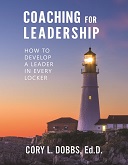
Coaching for Leadership: How to Develop a Leader in Every Locker. ($24.99)


The Academy for Sport Leadership 

The Academy for Sport Leadership’s underlying convictions are as follows: 1) the most important lessons of leadership are learned in real-life situations, 2) team leaders develop best through active practice, structured reflection, and informative feedback, 3) learning to lead is an on-going process in which guidance from a mentor, coach, or colleague helps facilitate learning and growth, and 4) leadership lessons learned in sport should transcend the game and assist student-athletes in developing the capacity to lead in today’s changing environment.


Filed Under: Leadership

Walking the Talk: How Self-Reflection Can Make You a Better Coach

November 19, 2017 by

by Cory Dobbs, Ed.D., The Academy for Sport Leadership


In 1953 New Zealand mountaineer Sir Edmund Hillary and his Nepalese Sherpa Tenzing Norgay reached the summit of Mount Everest—the first to do so.  Conquering Everest was and is one of man’s greatest challenges.  The grinding mental, emotional, and physical aspects of the climb along with intellectual problem-solving are the heart of the challenge.

In 1996, Rob Hall and Scott Fischer led a commercial expedition team attempting to climb Everest.  Hall and Fischer were considered expert climbers, both having scaled the summit of Everest.  The two highly talented climbers were hired by a motley crew of inexperienced hikers who made the trek to Nepal to attempt the climb under the guidance of the esteemed Hall and Fischer.

Jon Krakauer, a journalist, was a member of the climbers joining Hall’s team.  As it turned out, Krakauer ended up chronicling a tragic expedition in which five people lost their lives, including Hall and Fischer.

The two leaders, very experienced and somewhat arrogant, “rightfully” behaved authoritatively.  Both Hall and Fischer issued and demanded adherence to their rules for a safe and successful climb.  Krakauer recorded a self-confident Hall reminding his team “I will tolerate no dissension up there.  My word will be absolute law, beyond appeal.”

One team member recalled, “Rob had lectured us repeatedly about the importance of having a predetermined turnaround time on summit day…and abiding by it no matter how close we were to the top.”

Knowing the descent from the summit to be perilous, the leaders invoked a two o’clock rule.  The Sherpa’s, guides and clients all understood that if a climber had not reached the top by two o’clock in the afternoon of “summit day” they were to obey the order and turn around and abandon their bid for the summit. Yet Hall and Fischer would go on to ignore the safe-guard and not retreat down the slopes upon the clock hitting two.

Fischer kept climbing, though exhausted and suffering tremendously, touching the top at 3:45.  He continued to climb, every step perilous to his declining health, though he would never let any of his team to do so under similar conditions.

Krakauer’s book of the expedition, Into Thin Air, exposes the autocratic nature of Hall’s leadership.  Hall had a pecking order and no one was to question his decisions.  As Krakauer recorded, “Passivity on the part of the clients had thus been encouraged throughout the expedition.”  And the Sherpas and guides too were afraid of Hall’s rebuke, unsure of the consequences of displeasing him.

The Idiosyncratic knowledge and unique skills of Hall and Fisher were not enough to overcome the blizzard they encountered on their way back to Camp IV. Having scaled Everest they were in grave trouble.
[thrive_leads id=’3019′]
The vulnerabilities inherent in self-reflection lead us to develop mechanisms to bypass or minimize the embarrassment or threat that we might experience when we scrutinize our thoughts, feelings, and actions.  My sense is that both Hall and Fischer never really had to answer to anybody but themselves, believing self-reflection to be something for the other guy.  After all, why do you need to question your assumptions and behaviors if you’re successful? And the more successful, the less likely you are to self-reflect.  Bragging of their conquests and boasting about their track records led them to believe they were above their own rules—those were for the novice.

I’ve seen it time and time again, coaches that dismiss the practice of self-reflection tend to create cultures that turn out to have unintended and unpredicted side effects that degrade the environment.  These coaches fail to recognize or respond to value conflicts, often violating their own standards.  It is striking that many coaches choose to overlook the practice of self-reflection.

Thankfully what you do is not a matter of life and death.  However, deep inside your coaching bubble you might just find walking your talk difficult at times.  Contrary to the popular thought that all coaches are grounded in reality, it ain’t always so.  Like Hall and Fischer we all have times we simply ignore our rules.

Here’s where the rubber meets the road: the following seven questions require you to turn off the noise for fifteen minutes daily and sink your mind into your walk and your talk for the day.  If you are serious about self improvement, just like you ask your student-athletes to be serious about improvement, then adopt this process as a daily routine.  Learning to lead ourselves, just like leading others, is a truly a life-time project—our own Mt. Everest.  My guess is that after a solid month of performing this after action reflection you’ll seamlessly work your way into doing reflection-in-action.  Remember, reflection is all about growth and development—yours and your players.

Daily Self-Reflection Questions


What did I say I would do today that I didn’t do?

What did I do today that will affect team cohesion?  (positive and / or negative)

How did I relate to the players today?

What did I do today that is not something I’m proud of doing?

How did I lead the players today?  Coaches?

How did I follow the players today?  Coaches?

Based on what I learned today, what will I do tomorrow?


To find out more about and order Sport Leadership Books authored by Dr. Dobbs including Coaching for Leadership, click this link: The Academy for Sport Leadership Books

About the Author

Dr. Cory Dobbs is a national expert on sport leadership and teambuilding and the founder of The Academy for Sport Leadership.  A teacher, speaker, consultant, and writer, Dr. Dobbs has worked with professional, collegiate, and high school athletes and coaches teaching leadership as a part of the sports experience.  He facilitates workshops, seminars, and consults with a wide-range of professional organizations and teams.  Dr. Dobbs previously taught in the graduate colleges of business and education at Northern Arizona University, Sport Management and Leadership at Ohio University, and the Jerry Colangelo College of Sports Business at Grand Canyon University.


NEW RESOURCE

Coaching for Leadership: How to Develop a Leader in Every Locker. ($24.99)


Filed Under: Leadership

  • « Previous Page
  • 1
  • …
  • 15
  • 16
  • 17
  • 18
  • 19
  • …
  • 63
  • Next Page »

© Copyright 2026 Athletic Performance Toolbox

Design by BuzzworthyBasketballMarketing.com

Privacy Policy