Coaches Toolbox

  • Home
  • Mental Toughness
  • Leadership
  • Motivation
  • Staff Development
  • Program Building
  • Archives
  • Sport Specific Sites
    • Athletic Performance Coaching
    • Basketball Coaching
    • Football Coaching
    • Soccer Coaching
    • Track and Field Coaching
    • Volleyball Coaching

That’s Outside My Boat

July 6, 2016 by

A Team Leadership Exercise

“That’s Outside My Boat”

Leaders Focus on Objectives, Not Obstacles

Cory Dobbs, Ed.D.

Founder, The Academy for Sport Leadership

Years ago a young reporter assigned to the “minor” sports of the Olympic Games-rowing, canoeing, and kayaking—set out to uncover how the champions in these events mentally prepared for success. Considering these athletes participated in outdoor sports he began by asking what they would do in case of adverse conditions caused by rain, strong winds, or choppy waters—all obstacles certain to happen at some time during their events. To his surprise the response, was always the same: “That’s outside my boat.” After hearing this from athlete after athlete the reporter realized that a focused perspective was their guide to
inner excellence.

The Olympians’ intense internal focus served to eliminate distractions—those things that were out of their control—thereby allowing them to concentrate on those things they could control. These premier athletes chose an attitude of optimism over pessimism, of responsibility over irresponsibility, and of problem solver over victim of circumstances. They focused on results, not on obstacles.

Attitudes are important. Your outlook on life is the lens through which you see the world. When challenges and adversity hit you or your team, and they will, you have an opportunity to decide what to focus on. Your focus can and will influence your teammates. When your teammates are frustrated or uncertain about a course of action, they will look to you as a guide to their decisions and actions.

The Olympian rowers exemplify how focus on objectives, not on the obstacles, is the key to championship performance. The major point is that everyone has the ability to choose their attitudes and develop a positive state of mind. Players with poor attitudes are going to be unhappy and quick to blame their circumstance or other teammates for failure when confronted with trials and tribulations. Many choices of attitudes exist, and the one’s you and your teammates choose matter.

Obstacles are always a part of the competitive sports environment. Effective team leaders accept this fact and focus their attention on what they know they can do, regardless of the external context. Committed team members know and accept the vital role of problem-solver as a responsibility of team leadership. And being an effective problem solver requires leaders to know when a problem is outside the boat.

The high-performing team leader recognizes the importance of helping his or er teammates to manage the journey. The first step toward focusing your teammates on the objectives is reinforcing team member commitment to the team’s objectives—its vision, mission, and goals. And when obstacles arise, become an active change agent helping teammates adjust their attitudes and refocus their energy. Whether in calm or troubled waters, champions overcome obstacles by focusing on objectives.

Case in Point

On January 15, 2009, one man’s focus saved the lives of one hundred and fifty-five passengers aboard a fallen airplane. Captain Chesley Sullenberger was the pilot in command of Flight 1549 departing from New York’s LaGuardia Airport. Upon takeoff the plane ran into a large flock of birds that disabled the plane’s engine. With urgency as the driving force, Captain Sullenberger quickly surveyed the landscape, looking beyond the obstacles of the moment to formulate a resolution to the pending tragedy he was facing. While everyone else focused on the obstacles, Captain Sullenberger had his eyes fixed on the objective. He did the unthinkable: he landed the monstrous Airbus A320 on the
Hudson River.

Sullenberger was concerned only with what he could control. He focused on what was happening inside his aircraft. His training, like the Olympians, equipped him to adapt and adjust his course of action to meet the objectives of the situation.

Team Discussion Questions

What are some reasons people focus on obstacles?

How does the physical environment influence teams and their dynamics?

What steps can be taken to prepare for obstacles?

Why is “perspective” important in competitive sports?

To find out more about and order Sport Leadership Books authored by Dr. Dobbs including Coaching for Leadership, click this link: The Academy for Sport Leadership Books

About the Author

A former basketball coach, Cory’s coaching background includes experience at the NCAA DII, NJCAA, and high school levels of competition. While coaching, he researched and developed the transformative Becoming a Team Leader program for student-athletes. Cory has worked with professional athletes, collegiate athletic programs and high schools teaching leadership as a part of the sports experience and education process. Cory cut his teeth as a corporate leader with Fortune 500 member, The Dial Corp. As a consultant and trainer Dr. Dobbs has worked with such organizations as American Express, Honeywell, and Avnet.

Cory has taught a variety of courses on leadership and change for the following universities:

Northern Arizona University (Graduate Schools of Business and Education)

Ohio University (Graduate School of Education / Management and Leadership in Sport)

Grand Canyon University (Sports Marketing and Sports Management in the Colangelo School of Sports Business)

Visit www.corydobbs.com to read Cory’s leadership blog.

Filed Under: Leadership

Pat Summitt Quotes

July 5, 2016 by

By clicking on this link, you can read some excerpts from her book. Reach for the Summit. I hope these thoughts Pat Summitt quotes will be a useful resource for the team building and leadership aspects of your coaching.

There is no such thing as self respect without respect for others.

Individual success is a myth. No one succeeds all by herself.

People who do not respect those around them will not make good team members and probably lack self esteem themselves.

Being responsible sometimes means making tough, unpopular decisions.

Admit to and make yourself accountable for mistakes. How can you improve if you’re never wrong?

Loyalty is not unilateral. You have to give it to receive it.

Surround yourself with people who are better than you are. Seek out quality people, acknowledge their talents, and let them do their jobs. You win with people.

Value those colleagues who tell you the truth, not just what you want to hear.

Communication eliminates mistakes.

We communicate all the time, even when we don’t realize it. Be aware of body language.

To make sure that they are getting her message, Coach Summitt has asked her players to respond to a correction in practice by saying “rebound,” and to being praised by saying “Two points.”

Make good eye contact.

Silence is a form of communication, too. Sometimes less is more.

Discipline yourself, so no one else has to.

Self discipline helps you believe in yourself.

Group discipline produces a unified effort toward a common goal.

Discipline helps you finish a job, and finishing is what separates excellent work from average work.

Do the things that aren’t fun first, and do them well.

See yourself as self employed.

Put the Team Before Yourself.

When you understand yourself and those around you, you are better able to minimize weaknesses and maximize strengths. Personality profiles help.

Success is about having the right person, in the right place, at the right time.

Know your strengths, weaknesses, and needs.

Be flexible.

Teamwork doesn’t come naturally. It must be taught.

Teamwork allows common people to obtain uncommon results.

Not everyone is born to lead. Role players are critical to group success.

In group success there is individual success.

Make Winning an Attitude.

Combine practice with belief.

Attitude is a choice. Maintain a positive outlook.

No one ever got anywhere by being negative.

Confidence is what happens when you’ve done the hard work that entitles you to succeed.

Competition isn’t social. It separates achievers from the average.

You can’t always be the most talented person in the room. But you can be the most competitive.
There is nothing wrong with having competitive instincts. They are survival instincts.

It’s what you learn after you know it all that counts the most.

Change equals self improvement. Push yourself to places you haven’t been before.

Handle Success Like You Handle Failure. You can’t always control what happens, but you can control how you handle it.

Sometimes you learn more from losing than winning. Losing forces you to reexamine.

It’s harder to stay on top than it is to make the climb, Continue to seek new goals.


Filed Under: Leadership

Teaching Notes for Coaches

June 27, 2016 by

Mike Neighbors University of Arkansas Women’s Head Coach. These are just some random notes that I have taken at various clinics, coaching conversations, and other random talks with colleagues.

Short poem on the way today’s athletes view the world. That is not to say that we give in, but that it is important to understand who we are coaching.

MY COACH IN MY WORLD
Pamper me, and I will not respect YOU.
Manipulate me, and I will resist YOU.
Intimidate me, and I will reject YOU.
Humiliate me, and I will despise YOU.

Prepare me, and I will trust YOU.
Care for me, and I will love YOU.
Guide me, and I will follow YOU.
Be an example for me, and I will be like YOU.

from Robert L. Kehoe, JR
“Winning Ways”

These are from Bob Wilson at the Vanguard University Coaches Summit:

Intentional teaching: everything you do should be intentional. Not reactionary. Teaching should have a purpose and a plan.

When you go to clinics:

1) Adopt it– hear something you like
2) Adapt it- make it your own and fit your program
3) Adept at it- get good at it

Sidewalks to Sideline to Significance: Teaching goes from their playing days, to their careers, to passing it on to others

Does your program reflect character? Does it perpetuate character?

“locked in” is the highest form of “buy-in” “credibility” is usually the missing ingredient when teams don’t have buy-in or locked-in with their coaches… What are you doing to insure credibility? If you don’t have it, why? If you can’t figure it out, just ask team, they won’t hold back!!!!

Recommended reading “Fall to Grace” … Dave Bliss story

4 Good Questions Every Coach Must have an answer for;
1) Why do I coach?
2) Why do I coach the way I do?
3) What does it feel like to be coached by me?
4) How do we define success?

“It’s only important when it’s important” best teams don’t focus on things ONLY when they are important (urgent) The important things are ALWAYS important.

W=What’s
I= Important
N= Now

“If a player shows up with a flaw that’s on them, if they leave with one, that’s on you!!”

Russ Davis-Vanguard University Head Coach

“I can teach you or train you… The methods are very different depending on your ability to motivate yourself.” Cori Close– UCLA Head Coach

Book recommendation… How Winning Works by Robyn Benincasa

Debbie Ryan- NCAA Hall of Famer

Now works in medical philanthropy. Says unequivocally that most of men’s health issues, especially coaches, can be prevented with routine check ups and early detections. Men only go to see a doctor when a woman they love makes them or when it hurts so bad they can’t function.

The following is from a book recommended by Coach Neigbors Generation iY: Secrets to Connecting With Today’s Teens & Young Adults in the Digital Age by Tim Elmore

You can read a little inside the book by clicking the image of the book cover at the left.

Dr. Tim Elmore is Founder and President of Growing Leaders, an Atlanta-based non-profit organization created to develop emerging leaders. Generation iY is the younger Millennials, born after 1990. They have grown up with ipods, iphones, and the internet, in a world that allows for high speed, constant connection, sedentary lifestyles, pitiful relational skills, and a large dose of narcissism. (15) Elmore gives suggestions for guidance within each chapter.

A college survey reveals that many are overwhelmed with stress, some from pressures their parents put on them to succeed and others who had undue comfort and a lack of healthy pressure prior to college. They are over connected with much noise, busyness, connection, talk, volume, and speed, but many are miserable in relationship skills, emotional intelligence, patience, listening, and conflict resolution. Many have been sheltered and overprotected and are unready for life in the real world. Some overestimate their own importance and feel entitled to special treatment. They can be narcissistic, me-centered, impatient, demanding, and short-tempered, having a poor work ethic and minimal long-term commitment. They are activists and also slackers, wanting to change the world — if it can be done quickly. Waiting is very hard.

Some were raised in families where no one told them ‘no’ about anything and they feel entitled. Everybody got a
ribbon and they never had a chance to lose. They are connected mostly with each other, get most of their guidance from their peers, and model themselves after others from their own generation. But they don’t know how to relate to other generations.

How to get through to this group:\

1. They want to belong before they believe.
2. They want an experience before an explanation.
3. They want a cause before they want a course.
4. They want a guide on the side before they want a sage on the stage.
5. They want to play before they pay.
6. They want to use but not be used by others.
7. The want a transformation, not merely a touch.

In the real world success is about 25% IQ and 75% EQ (emotional intelligence).

“What an adolescent needs is an adult (parent, teacher, coach, employer, pastor, or leader) who makes appropriate demands and sets appropriate standards for them in a responsive environment of belief and concern. In short, they need adults to display a balance of two elements–they need them to be both responsive and demanding.” (66) They need a balance of autonomy — to act independently– and responsibility — to be accountable.

Some suggestions:

• Intentionally mix the generations.
• Teach practical life skills
• Provide opportunities for service.
• Give opportunity to practice maturity.
• Engage kids in actively helping others (not just voting on a web site).
• Reward the development of real skills and actual accomplishments (not just showing up).
• Set boundaries.
• Develop rituals to mark rites of passage.


Filed Under: Program Building

Shared Leadership

June 20, 2016 by

By Juan Pablo Favero, Head Coach, Women’s Soccer, Oakland University

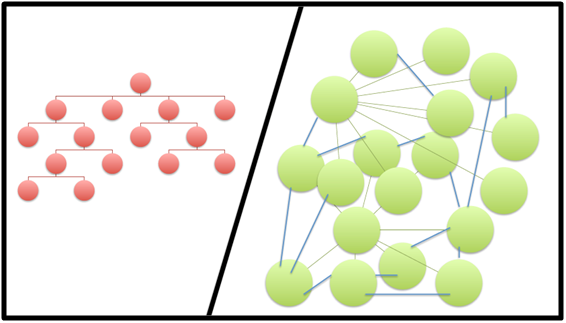
Traditional leadership models, often hierarchical in nature, are changing and evolving.  One of these models is the captain model, which tends to be too rigid and centralized, especially for modern-day athletics.  Even the military, where the shift to special operations teams is prevalent in fighting today’s wars, is not organized with a traditional commanding officer, top-down hierarchical model.  Instead, a group of leaders giving input and making joint decisions is the way that these elite teams have the required flexibility and synergy to make them successful in high stakes situations. Yes, there is an ultimate decision maker, and there always has to be, but many trained and competent voices are better than just one solitary one.

The key is to develop many leaders in a team who can be incrementally given more responsibility and decision-making ability as they are exposed to leadership principles.  Given ample opportunity to apply these principles and grow in confidence to make decisions, they are then able to take action in critical moments.

Most athletics teams start developing leaders in their junior or even senior year, depending if they are a fall or spring sport, often expecting these captains to have learned by osmosis and with limited training:  maybe a book or two and some conversations with the coach.   It is presumed that with this limited information, they will be able to carry the burden of knowing how to best influence their teammates and lead the team.  In most cases in my experience, this is just too much responsibility for one young person to have.  Yet, the model of having multiple captains does not make sense either because it can actually cause the opposite effect than intended by creating a type of bystander effect of sorts. .  Shared leadership on the other hand is not exclusive or limited in its numbers and creates increased buy-in and commitment.  Think of it as leaders in different areas of strength who can pass the baton to each other and support one another’s leadership efforts.

According to Jeff Spahn of the Leading Leaders consulting group, “the emerging question in leadership today is not about how to develop leaders, but rather how does a team of leaders lead each other.”  He goes on to say that this goes beyond collaboration and is more how people actually lead and follow simultaneously. This sounds like shared leadership.

What is it?

In his best-selling book Linchpin, Seth Godin shares the example of the fast and complex Japanese transit system.   It operates on schedule and on budget, not by top-down directive, but by a large pool of empowered employees making the best decisions as the challenges present themselves. “Letting people in the organization use their judgment turns out to be faster and cheaper—but only if you hire the right people and reward them for having the right attitude.”

It’s not rocket science; it is basically a way to include ALL your players and personnel in the leadership development and implementation processes.  Why limit it to just a few hand picked players, who will undoubtedly be looked upon as favorites?  Why leave it to chance?

If you wait until players are upperclassmen, they will graduate before they can learn their leadership craft through both successes and mistakes, and unfortunately, your program will miss out on the full impact they could have. We need to start to expose, train, and encourage all of our players to lead, yes, even as young freshmen.  What is the worst that could happen? Even if they choose to pass on the call to lead, at the very least they may become better followers since they will better understand the difficulties and challenges associated with leading.  In other words, this is a clear way we can not only teach leadership principles but also create buy in and a higher level of team cohesion and common purpose.

The idea that there can be too many “chiefs and not enough Indians” or too many “cooks in the kitchen” is a common objection to this model.  Part of the key in teaching shared leadership is exactly that they can also learn how to become better followers and more supportive team members when it is not their turn to lead or in an area of someone else’s strength.  Personally, I would rather have too many leaders on my team, all pulling in the same direction, than not enough.

The Traditional Hierarchical, top-down athletics captain model vs. Shared Leadership model:

favero1How does Shared Leadership fit in to this?

SINGLE LEADERSHIP: One leader figure (coach and/or captain) and many followers results in control and predictability.  Also creates average results, and high risk of monotony and burnout.

FOLLOWERSHIP: All as followers results in lack of initiatives, no or few new ideas, limited forward movement and lack of buy-in/shared ownership.   Also creates low energy, apathy, burnout and average results.

MULTIPLE LEADERSHIP: Many leaders attempting to lead all the time (coaches and/or captains) results in a power struggle, perpetual chaos, work never gets done efficiently. Also creates poor performance, conflict, and bad results.

SHARED LEADERSHIP: Leading and following simultaneously in a true shared responsibility model, leveraging the depth of experience, expertise, and oppositional points of view of every member required to truly create and execute at a an optimal level. The openness and humility of all involved to lead in this way creates a higher level of performance, team unity, and better results.

Why is it better?

The traditional leadership hierarchical model is quickly becoming archaic.  Today’s athlete wants to know the why behind what they are being asked to do.  When we let them in behind the curtain and start to show them the inner workings of team life and what is required to lead, some of the following benefits can occur:

  • Increased commitment and buy-in
  • Increased team unity and cohesion; improved team environment
  • Developed future leaders
  • Implemented successfully=less stress
  • Better “followship” is created
  • Shared leadership work load, diminishing the burden
  • Increased performance on the field due to creating more confident decision makers
  • Increased enjoyment of the process
  • Higher resilience to face challenges, obstacles, and failure: Losing teams panic and are paralyzed, winning teams with shared leadership raise their performance making up for a deficit in talent
  • Improved synergy which comes from using everyone’s strengths
  • Easier leadership transitions when leaders are absent (injury, suspension) or when they depart (graduation).
  • Minimized impact when mistakes are made

Challenges in implementation

Like any change in paradigms, the most difficult aspect will be to navigate the team through change.  You may receive some resistance from your players, especially from those who believe it is their “due time” and have an expectation to be captains.  Of course, these are the people who need to learn the most about true leadership principles, including the servant-leadership model and not the self-serving leadership fallacy (the difference between these two is stark: being a leader is not about what I can gain, it is about how can I serve as a leader for the benefit of others and the team).

You may have to overcome the biggest obstacle of all which may be your own leadership dogma.  It usually sounds like this: “This is the way it always has been done” or “I was a captain” or “my team had captains, and it is the right of passage to seniors.”  I just want to encourage you to ask yourself … is this the best model for today’s athletes and for their current and future development?  Even if it has worked for you in the past, is it working now?  Will it work in the future?

Ideas on how to implement it

  • Leadership Education
  • Small Leadership Groups
  • Allowing your leaders to make leadership mistakes and learn from them
  • Self-Discovery assessments: Personality assessments, TAP (Troutwine Athletic Profile), leadership styles assessments, 5 love languages, et al.
  • Discussion on what they believe leadership is, and what a shared leadership team should look like
  • Reward independent thinking, enveloped within a team-first concept
  • Recruit the right kind of people for your team, not just the most talented players. The value of positive, responsible, accountable, and team-first members who are confident to make decision is critical in competitive athletics and in the world
  • Team sessions to create mission statement, team goals, and team process to achieve those goals
  • Reinforce any of the aforementioned behaviors and attitudes
  • Encourage player-led initiatives and projects

Shared leadership is not about competition, ego, or jockeying for position.  It is instead about collaboration, cooperation, and a shared purpose and direction.

It is about servant leadership and doing what is best for the team, even when it may not seem like it’s in my best personal interests.  It is servant-like, team-first oriented, but it is also driven, focused, and purposeful action.  Finally, it also requires the attitude of knowing when and how to follow as well as when and how to lead.  This ying-yang type of balance is what makes this type of leadership environment difficult to attain but so powerful when it is reached.

To find out more about and order Sport Leadership Books from the Academy for Sport Leadership, including a Leader in Every Locker, Click this link: The Academy for Sport Leadership Books

© JPF Coaching & Consulting (Posted on the Coaches Toolbox by permission)


Filed Under: Leadership

What if Everything You Learned is Wrong?

June 10, 2016 by

Cory Dobbs, Ed.D.

Founder, The Academy for Sport Leadership

I want the truth!

You can’t handle the truth!

So goes the memorable dynamic exchange between Tom Cruise and Jack Nicholson in the 1992 movie A Few Good Men.  We, at least most of us, sympathize with Cruise’s character as he pushes relentlessly, risking his reputation and career in, pursuit of the truth.  But do we really want the truth?

The Galileo Effect.   Aristotle was smart.  Considered by most historians to be a genius.  But he was wrong about one thing.  He taught that that heavier objects fall faster than lighter ones.  Galileo proved that wrong.  We now know that the equivalence principle proves all objects fall at the same rate in a gravitational field.  A-dog was big time wrong.  Galileo also challenged the Catholic Church.  Yes, he dared to contest the church’s position of a geocentric world.  He too proved that to be wrong.

What about the team captain principle?  You know, appoint or assign several players to the role of team captain and you’ll have your internal leadership problem solved.  Or, at least somewhat solved.

Dead wrong.  Those, coaches and leadership educators that cling to the team captain model are on the wrong end of the 21st Century practice of peer leadership.  Dead wrong.  Some educators are compelled to defend their models built in the 20th Century.  But today we know soooo much more.

Today, we know that everyone can, and will, become a leader; even if it’s simply in their own household as a parent.  Simple example, but if you feel the need to put down the idea of everyone learning to lead you are dead wrong.  And I’m willing to deal with the backlash.

Let me reply by saying that modern science—neuroscience—proves that peer-to-peer interactions produce higher quality solutions to problems than  alone or even peer-to-superior relations.  And get this; the solutions are produced at a quicker rate than when the challenge is taken on by a lone wolf.  Oh, let’s not forget that anxiety inhibits learning.  And our studies show anxiety is greater when people don’t know how others will respond to their leadership.  Yes, a leader in every locker solves this.

That said…

Mankind has proven resistant to change, regardless of the evidence.  We favor “facts” that conform to our views, even in the face of conflicting information or outright contradiction.  Genuine challenges to established wisdom cause turmoil, because they impeach the establishment and its undeniable “truths.”  So in a world of constant change, we paradoxically find a recalcitrant world.  The traditional practice of team captains marches on.

A leader in every locker (see www.aleaderineverylocker.com) is heresy.  I’ve presented my findings and suggestions to many coaches, and audiences are quick to hark on the past.  “If it worked for Bob Knight, it’ll work for me.”  But what if everything you learned is wrong?

Remember, when Galileo and his telescope publicly challenged the geocentric view of the universe—established and accepted as Catholic dogma—the outcry was fanatical.  He was eventually arrested, tried, and imprisoned for this act.  Heresy said the masses.  Sadly, he died while under house arrest.
[thrive_leads id=’3019′]
Fortunately, objecting to poor theory or unfounded knowledge is far less dangerous today.  My research findings are clear; a leader in every locker trumps a few leaders in a few lockers.  However, this only happens when the coach takes responsibility for creating a learning environment in which every student-athlete feels accepted in their leadership role.

But have we really overcome our tendency to condemn those who challenge a new view of the world.  The unfortunate reality is that even with overwhelming evidence to the contrary, there are many who perpetually lay faith in existing truths—which are no longer, in fact, supported by scientific investigation.  My guess is it will be about another decade before the mainstream coach is ready to accept the role of leadership educator and educate every student-athlete to become a leader.

To find out more about and order Sport Leadership Books authored by Dr. Dobbs including Coaching for Leadership, click this link: The Academy for Sport Leadership Books
About the Author

A former basketball coach, Cory’s coaching background includes experience at the NCAA DII, NJCAA, and high school levels of competition. While coaching, he researched and developed the transformative Becoming a Team Leader program for student-athletes. Cory has worked with professional athletes, collegiate athletic programs and high schools teaching leadership as a part of the sports experience and education process. Cory cut his teeth as a corporate leader with Fortune 500 member, The Dial Corp. As a consultant and trainer Dr. Dobbs has worked with such organizations as American Express, Honeywell, and Avnet.

Cory has taught a variety of courses on leadership and change for the following universities:

Northern Arizona University (Graduate Schools of Business and Education)

Ohio University (Graduate School of Education / Management and Leadership in Sport)

Grand Canyon University (Sports Marketing and Sports Management in the Colangelo School of Sports Business)

Visit www.corydobbs.com to read Cory’s leadership blog.


Filed Under: Leadership

  • « Previous Page
  • 1
  • …
  • 39
  • 40
  • 41
  • 42
  • 43
  • …
  • 63
  • Next Page »

© Copyright 2026 Athletic Performance Toolbox

Design by BuzzworthyBasketballMarketing.com

Privacy Policy